
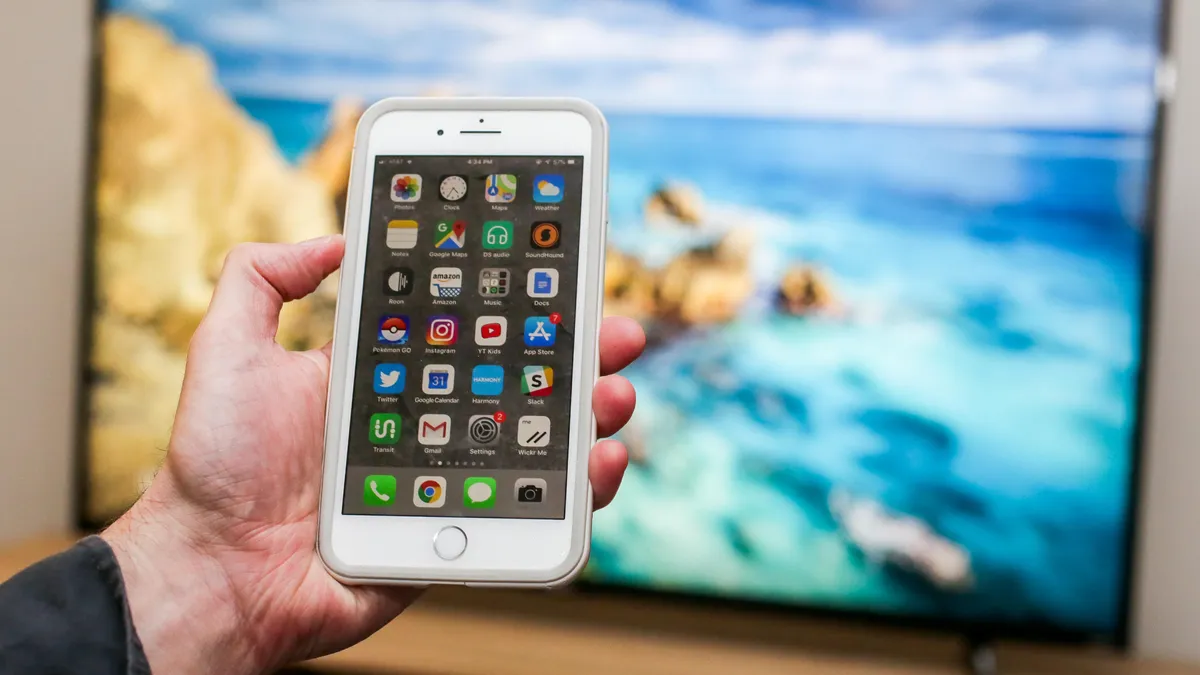
Choosing between Chromecast and AirPlay is not just a tech preference; it changes how reliably you can follow a live match on a big screen. Different casting methods handle latency, buffering, and bandwidth in ways that either preserve or disrupt the sequences you need to see to understand pressing, structure, and chance quality. If you care about tactical reading rather than just having the match “on in the background”, the casting route you pick can either sharpen or blur your view of the 90 minutes.
How Casting Method Shapes Your View of the Match
Casting affects where the stream originates, how much buffering is added, and how quickly pictures respond to real-time actions on the pitch. When everything works well, you get a stable, low-latency feed that lets you track line height, off-ball runs, and defensive shifts without thinking about the technology. When it works poorly, added delay or micro-freezes appear just as a team springs a counter-attack, breaking the causal chain from build-up to shot and weakening your tactical understanding.
Because football analysis relies on continuous sequences—press triggers, rotations, and repeated routes into the box—small technical design choices in Chromecast and AirPlay have outsized effects. Understanding those differences helps you pick the setup that best matches your device ecosystem and analytical expectations, rather than simply defaulting to whatever icon is easiest to tap.
What Chromecast and AirPlay Actually Do Differently
Chromecast and AirPlay both move video from a smaller device to a larger screen, but the path they use is not the same. Chromecast typically has the TV or dongle pull the stream directly from the internet after you “hand off” a link, so your phone or laptop becomes more of a remote than a video source. AirPlay, in many common use cases, sends the content from your Apple device to the receiver, so your iPhone, iPad, or Mac remains heavily involved in the pipeline.
This leads to different strengths. Chromecast offloads most of the heavy lifting to the TV or dongle and to downstream bandwidth, which can help stability on congested networks. AirPlay benefits from tight integration with Apple hardware and OS-level encoding, which can produce low mirroring latency and smooth playback when the local Wi‑Fi is strong. For live football, these traits translate into trade-offs between delay, robustness, and how sensitive your setup is to local network conditions.
Latency and Delay: How “Live” Does Each Feel?
Latency—the delay between the stadium action and what you see—matters because it affects how naturally you can read the flow of the match. Very high latency or inconsistent delay makes it harder to connect crowd noise, commentary, and your own observations with what actually happened on the pitch. Tests of mirroring latency suggest that, on clean 5 GHz Wi‑Fi, AirPlay can achieve end‑to‑end delays around 80–120 ms, while Chromecast mirroring often runs closer to 250–450 ms, especially when using browser-based casting.
That said, “standard” live streaming protocols used by football services typically add several seconds of latency regardless of casting method. The main difference for your viewing is consistency: a stable, predictable delay is easier to adapt to than one that jumps around. AirPlay’s tight hardware–software coupling tends to keep delay more uniform on all-Apple setups, while Chromecast can vary more depending on whether you are casting a native app, a browser tab, or a mirrored screen.
Latency and Stability Snapshot
Here is a simplified look at how the two often compare for video casting and mirroring when the underlying stream is the same.
| Aspect | AirPlay (to Apple TV / AirPlay TV) | Chromecast (to Chromecast / Google TV) |
| Typical mirroring delay | ~80–120 ms on clean 5 GHz Wi‑Fi | ~250–450 ms typical mirroring delay |
| Behaviour under congestion | Delay rises but often still usable | Delay and buffering can increase sharply |
| Stream hand‑off for apps | Often device-sourced or hybrid | TV/dongle pulls stream directly after hand‑off |
| Sensitivity to device load | Higher (source device does more work) | Lower once casting is established |
For pure match watching rather than interactive tasks, both are workable when set up well. The key is choosing the one that, in your environment, delivers the more consistent delay and fewer micro-stutters so your reading of pressing waves and chance creation is not broken up.
Bandwidth and Network Behaviour When Streaming Football
Football streams, especially in HD, require several megabits per second of sustained bandwidth, and how each casting protocol uses that bandwidth matters. Guidance on casting behaviour notes that AirPlay often relies on your device uploading the stream across the local network, which can consume 15–20 Mbps or more for 1080p in demanding cases. Chromecast, by contrast, usually has the receiver fetch the video directly from the internet, so your phone or laptop uses minimal data while the downstream link carries the load.
In a household with limited Wi‑Fi capacity or heavy local traffic, AirPlay’s reliance on the device-to-TV path can make it more vulnerable to congestion and interference. Chromecast’s direct-download model can be more forgiving, as long as the router-to-dongle link is strong. For live football, that difference influences how often your stream drops resolution or buffers in the middle of a long attacking sequence, which directly affects the continuity of your tactical reading.
Watching Live to Understand xG and Chance Quality
The real value of casting live ดูบอลสดวันนี้ changy onto a big screen is the added clarity it gives you for judging chance quality in real time. Expected goals evaluate each shot by the probability it becomes a goal based on factors such as distance, angle, defensive pressure, and assist type. On a large, stable display, it is easier to see:
- Whether a cutback removed most defenders from the shooting lane.
- How central or wide the shooter is inside the box.
- If the header comes from a crowded area or an isolated duel at the back post.
These factors are the same ones xG models use. When Chromecast or AirPlay deliver a smooth, HD picture, you can practice estimating which chances are high-value and which are speculative, then compare your impressions to post-match xG summaries. If casting glitches, adds big jumps, or drops quality at key moments, your ability to tie what you see to the underlying numbers is weakened, regardless of which protocol you chose.
Choosing the Better Option for ดูบอลสด Sessions
For serious ดูบอลสด sessions where you want to read tactical trends and finishing variance, the “better” choice between Chromecast and AirPlay depends heavily on your ecosystem and network strength. In an all‑Apple setup with strong Wi‑Fi, AirPlay’s low mirroring delay and tight OS integration help create a responsive, consistent viewing environment that preserves pressing triggers, off-ball rotations, and chance build-up without noticeable lag. On more mixed or congested networks, Chromecast’s habit of moving streaming to the TV or dongle can be more robust, reducing your phone’s workload and sometimes lowering buffering frequency during long matches.
Either way, the goal is the same: a stable, predictable HD feed that lets you watch entire attacking patterns, not just the final shot. That continuity is what allows you to spot patterns like a team repeatedly creating cutbacks with high xG but finishing poorly, or another side relying on low-probability long shots that inflate their goal tally for a few weeks. The protocol that consistently delivers that stability in your specific setup is the one that best supports your analytical viewing, even if the theoretical technical winner differs on paper.
Summary
Both Chromecast and AirPlay can serve live football well, but they take different paths that matter for serious match reading. AirPlay offers tighter integration and potentially lower mirroring latency on strong Apple-centric networks, giving a very immediate feel to live play. Chromecast typically leans on the TV or dongle to handle streaming directly, which can improve stability and reduce the sending device’s load when bandwidth is limited. For watching live football with an eye on tactics and xG-style chance quality, the better option is whichever gives you the smoother, more consistent HD picture in your own environment, preserving the full sequences that show how chances are really created and defended across the 90 minutes.