
Classrooms—both physical and digital—are changing faster than ever. Students want content that feels alive, expressive, and memorable; not some static slides filled with too much text and little personality. That’s when the use of animated, lip-synced characters comes in. Thanks to a tool quite similar to an AI video generator free, teachers, tutors, and EdTech platforms also find it incredibly easy to reimagine regular lessons as engaging, story-driven learning adventures.
And at the very core of this transformation is Pippit, a platform that helps educators bring history icons, cartoon characters, and custom avatars to life, capturing attention right at the moment when students might otherwise zone out.
Let’s dive in and explore why this approach works, how it elevates teaching, and how you can get started in creating your own lip-synced educational videos with Pippit.

Why lip-synced characters are becoming the teacher’s secret weapon
Educators are masters at multitasking: explaining concepts, teaching critical thinking, keeping students engaged, and checking for understanding. But let’s be honest: maintaining engagement in today’s digital world is a full-time challenge on its own. That’s where lip-synced characters shine.
They deliver the content as a story, not a lecture
Students pay attention to the characters—far more than to text-heavy slides or static images. When an animated figure actually speaks the lesson, it feels more like entertainment than homework.
They let teachers “clone” themselves
-
Need an explainer video for vocabulary?
-
A summary of a history chapter?
-
A fun character-led math introduction?
Instead of having to record yourself each time, you could assign the explanation to an avatar that never gets tired, never loses its voice, and always performs with consistent clarity.
They meet students where they are
Kids are already consuming character-driven content on platforms like YouTube and TikTok. Bringing that same energy into the classroom makes learning feel familiar, friendly, and fun.
The learning science behind talking avatars
Engagement isn’t just about fun; it’s about cognition.
Multisensory input can raise retention
When students see a character move and hear the character explain, they absorb more of the lesson.
Characters reduce cognitive load
Lip-syncing helps students focus on the spoken content since it is congruent visually with the audio.
The emotional connection improves understanding
A friendly cartoon guide delivering tricky concepts feels less intimidating than a traditional textbook. With AI lip sync becoming more natural and expressive, these characters can convey a sense of tone, emotion, and pacing to help students internalize concepts effortlessly.
Time-traveling teachers: Using historical figures as lesson hosts
Imagine this:
-
Marie Curie explaining the discovery of radium
-
Galileo breaking down his telescope experiments
-
Abraham Lincoln is introducing a civics lesson
-
Cleopatra teaching about ancient Egypt
-
A medieval knight walking through the feudal system
Lip-synced avatars allow educators to make these imaginative scenarios real. Students learn not just from the teacher but from characters representing the story itself. History comes alive when it is told by those who have made it.
EdTech platforms are already running with this trend
Large learning platforms use these characters to:
-
Narrate long-form lessons
-
Deliver micro-learning snippets
-
Guide students through animated exercises
-
Offer motivational “you’ve got this!” messages
-
Personalize learning paths by using avatar mentors
Smaller independent tutors are doing likewise: using Pippit to make themselves stand out with content that feels more like a show rather than a worksheet. Coupled with the videos are branded openings created by a YouTube intro maker, and these add even more polish for educators creating full learning series.
Creativity meets curriculum: Endless ways educators use lip-synced characters
Here are a few real-world examples educators have embraced:
Animated explainer series
A fun alien or robot mascot guides students through lessons in STEM.
Animated animals as reading coaches
Characters teach phonics and grammar in a way kids can instantly visualize.
Avatars in art style for storytelling
Teachers create a narrative guide who “hosts” each chapter.
Literature characters are brought to life
Imagine Shakespeare explaining a sonnet with hand gestures and emotion.
Experiments in science explained by experts themselves
Even the most complex topics feel digestible coming from a friendly animated scientist. Lip-synced characters make the lessons immersive, relatable, and binge-worthy.
How to create lip-synced educational characters with Pippit
Ready to create teaching videos that hold attention rather than lose it?
Here is the complete step-by-step process.
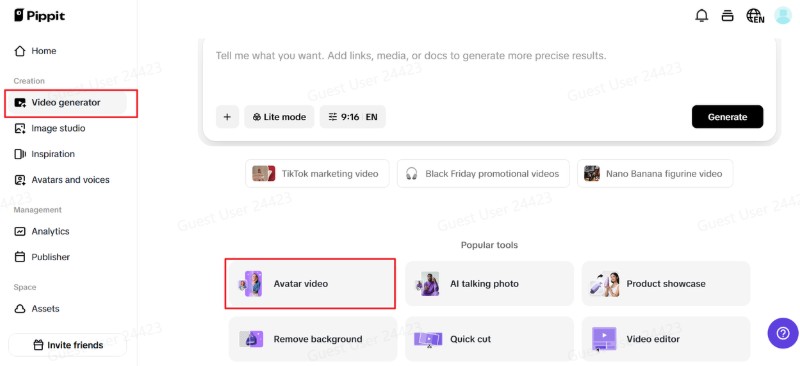
Step 1: Open the video generator
Log in to Pippit and select Video generator from the left-hand menu. In the Popular tools section, select Avatars to choose or create AI avatars for your videos. This feature enables smooth voiceover-to-avatar syncing for dynamic and engaging content.
Step 2: Select an avatar and modify the script
Once in the avatar tools, choose one of the avatars from the Recommended avatars section. You can filter avatars by gender, age, industry, and more to find the best fit for your lesson. Once you have selected the avatar, click Edit script to set the dialogue. To further enhance your video, scroll down to Change caption style and select one of the various caption designs to match your lesson’s theme and keep your students visually engaged.

Step 3: Export & share your video
Once lip sync has been applied, click on Edit more for further refinement of the video.
Inside the editor, you can:
-
Adjusting voice timing
-
Edge facial expressions
-
Add background music
-
Include text overlays for key concepts
Once satisfied with the video, click on Export to save a copy in your desired format. If you want to share it directly, through Publisher, you can create a post on TikTok, Instagram, or Facebook, or schedule your video.

Why students learn better when lessons feel alive
Here’s what occurs when educators shift from static lessons to character-led ones:
Focus for longer periods
-
Movement
-
Voice
-
Expression keep attention to where it belongs
Conclusion
When lessons feel more like a show, students absorb more without feeling like they’re “studying.” Concepts become easier to visualise. Characters can show what words alone can not-from history to science to storytelling. Teachers save time. Once you build up your character library, you can create new lessons in minutes, not hours.
Education becomes more personalized, more flexible, and way more fun. Ready to Turn Your Lessons into Student-Approved Stories? The future of teaching blends knowledge and creativity in equal parts—and lip-synced characters are leading that shift. Whether you’re teaching young learners, creating adult training modules, or building a full EdTech curriculum, Pippit provides you with the tools to create content that your students will actually want to watch.
Get started with Pippit today, creating dynamic, character-led educational videos and bringing each lesson to life with energy, clarity, and imagination.