
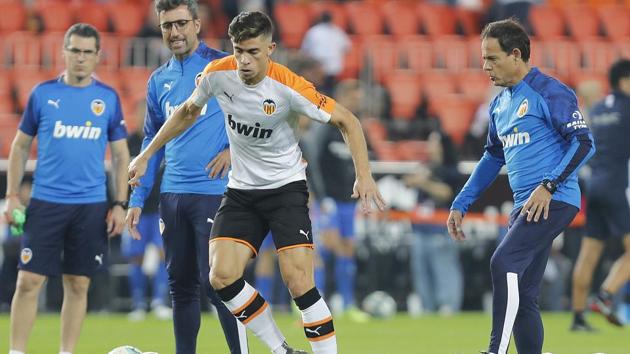
Assessing player fitness in La Liga today means reading far more than who “looks tired” on a matchday. Clubs track physical output through GPS, use detailed running and sprint data from league-wide platforms, and connect those numbers to injury risk, particularly for hamstrings and other high‑load muscle groups.
Why Physical Output Matters for Judging La Liga Player Fitness
Fitness in this context is not just about distance covered; it is about the ability to repeatedly perform high‑intensity actions over a congested calendar without breaking down. La Liga’s Football Intelligence & Performance department has analysed more than 1,500 matches and found that the strongest teams early in seasons tended to run more, especially in high‑intensity and sprint zones, than lower‑rated sides. That link between physical output and perceived performance shows why coaches treat fitness data as a core performance indicator rather than a side detail.
However, more running is not automatically better. Research on La Liga players shows that hamstring injuries are often preceded by short bursts of unusually high running demands, especially sprinting above 21 km/h in a five‑minute window compared with a player’s normal match profile. This means that fitness must be robust enough to handle spikes in intensity, not just steady workloads, or those spikes become injury triggers instead of competitive advantages.
How La Liga Tracks Fitness Through Beyond Stats and Internal GPS Data
At league level, La Liga’s Beyond Stats project provides public metrics on distances covered, high‑intensity runs and pressing‑related movement, including distance covered within five seconds of losing possession. These measures give supporters and analysts a proxy for how hard teams and players work in defensive transitions and pressing phases, phases where fatigue often accumulates fastest.
Inside clubs, GPS dashboards log every metre run in training and matches, tracking accelerations, sprint speeds and asymmetries between left and right legs. Performance staff use this granular data to flag when a player’s current load is unusually high versus their own baseline and to adjust training or minutes to protect them. The aim is to balance enough stimulus to maintain or build fitness with enough recovery to prevent overuse and soft‑tissue injuries.
Mechanisms: How High-Intensity Running Connects to Injury Risk
Studies monitoring La Liga players over multiple seasons have found that hamstring injuries are strongly associated with short periods of unusually high-speed running. In one prospective cohort of 281 players across seven La Liga teams, the odds of a hamstring injury were more than seven times higher when a player ran over 30 metres at ≥21 km/h in a five‑minute period compared to their habitual high-speed running at that time in control matches.
Importantly, most hamstring strains occurred during sprint-related actions: over half were pure high‑intensity running incidents, and more than 80% involved sprinting in some way. Deceleration from high speeds and braking actions also accounted for a substantial minority, emphasising that both accelerating and slowing from intense efforts stress the hamstrings. This pattern tells coaches that fitness programmes must prepare players for brief, very demanding periods, not just steady-state running.
Conditional Scenarios Where Fitness Failures Are Most Likely
The same research shows many hamstring injuries cluster in the last 15 minutes of each half, when accumulated fatigue interacts with high-intensity actions. Late-game sprints at or near maximum speed, particularly if a player has already had a heavy load in previous matches, represent classic risk situations.
Congested schedules amplify this risk. Reports on elite clubs coping with back‑to‑back fixtures highlight a structural challenge: regular starters train less than ever because matches come every three days, while substitutes need extra high‑intensity work to stay prepared. If that balance is wrong, some players risk under-conditioning and others overexposure, with both groups more vulnerable when asked to perform sudden bursts of maximal running.
How Team-Level Fitness Trends Show Up in Performance Data
Fitness issues often reveal themselves indirectly through team performance patterns. A recent report on Barcelona’s 2025/26 campaign noted that 14 La Liga teams were covering more distance per game than Barça, a sharp contrast with earlier seasons under Hansi Flick when they topped the league in distance, sprints and mid‑intensity runs. That physical decline coincided with a dip in pressing intensity and results, suggesting that reduced collective fitness or availability was undermining an aggressive tactical model.
Injuries and interrupted pre‑seasons also change how fit key players appear. Commentators around Barcelona point out that talents returning from ACL or long-term muscle injuries need extended time to regain full match readiness, even once medically cleared, and that their running outputs lag behind previous norms for months. When multiple core players simultaneously operate below peak capacity, the team’s ability to press, counter-press and sustain tempo naturally falls.
UFABET, Situation-Based Reading, and Interpreting Fitness from the Outside
When viewing La Liga through a betting destination or football betting website such as ยูฟ่าเบท168, fitness is one of the hardest variables to price because most raw data sits inside clubs. From a situation-based selection perspective, observers can approximate fitness by combining public signals: compressed schedules, travel demands, recent minutes logged, visible running intensity trends, and injury histories. If a team has played multiple high-intensity games in quick succession, shows a drop in distance and sprint metrics in Beyond Stats, and carries a growing injury list, it is rational to assume some degradation of effective fitness even before odds or pundits fully react. Using these cues to adjust expectations—perhaps downgrading pressing teams that suddenly run less, or upgrading fresher sides with deeper rotation—anchors decisions in cause–effect reasoning rather than vague impressions about “tired legs.”
List: Practical Indicators for Assessing La Liga Player and Team Fitness
Because direct GPS feeds are not public, external assessment relies on combining several indirect indicators. Each indicator links observable information to a plausible conclusion about fitness levels.
- Match load and rest windows: track how often key players start and how many days of rest lie between fixtures; repeated 90‑minute appearances with fewer than three full rest days strongly suggest higher fatigue and elevated injury risk.
- Running intensity trends: use league-released metrics on distance, sprints and high‑intensity runs; sharp declines relative to a team’s own recent history can signal either tactical change or physical drop-off that limits pressing and transitions.
- Injury clusters and recurrence: note when squads accumulate similar soft‑tissue injuries, especially hamstring and calf issues; repeated cases often point to mismatches between load and fitness rather than sheer bad luck.
- Substitution patterns and late‑game performance: observe whether teams consistently fade in the last 20 minutes, concede more chances or rely heavily on early substitutions to maintain tempo; this behaviour often reflects underlying conditioning constraints.
Considering these indicators together makes fitness analysis more robust than relying on any single metric or anecdote, especially over the course of a long La Liga season.
Where Fitness Analysis for La Liga Players Commonly Goes Wrong
Fitness readings become unreliable when they treat raw distance as a simple proxy for form. La Liga’s own research shows that, at the very start of seasons, top-rated teams do tend to run more and at higher intensities, but later the relationship between total distance and quality becomes more nuanced. A team can run less yet play better if it uses more efficient positioning and presses selectively rather than constantly.
Another trap is ignoring individual baselines and context. Studies on La Liga hamstring injuries emphasise that risk spikes when running demands exceed a player’s habitual high‑speed load in a short window, not just when they hit an arbitrary distance. Similarly, elite clubs facing relentless fixture calendars may cut training intensity to preserve players, which can paradoxically lower conditioning if done poorly, increasing injury odds once matches ramp up again. Without accounting for these dynamics, external observers can misinterpret both sudden drops in running output and short‑term injury waves.
Summary
Analysing La Liga player fitness today means combining league-wide running and sprint data, club-level workload patterns and injury research rather than treating “distance covered” as a standalone truth. League studies tie high-intensity running and sprints to both performance and hamstring injury risk, especially when short bursts of unusually hard running occur late in halves or after congested schedules.
Team-level trends—like Barcelona’s recent drop from a league-leading physical profile to mid-table in distance and intensity—show how changes in fitness and availability can reshape tactical effectiveness. By reading match loads, intensity metrics, injury clusters and substitution patterns together, observers gain a more realistic picture of which La Liga squads are still physically climbing and which are quietly running on fumes.